LMC Simulation
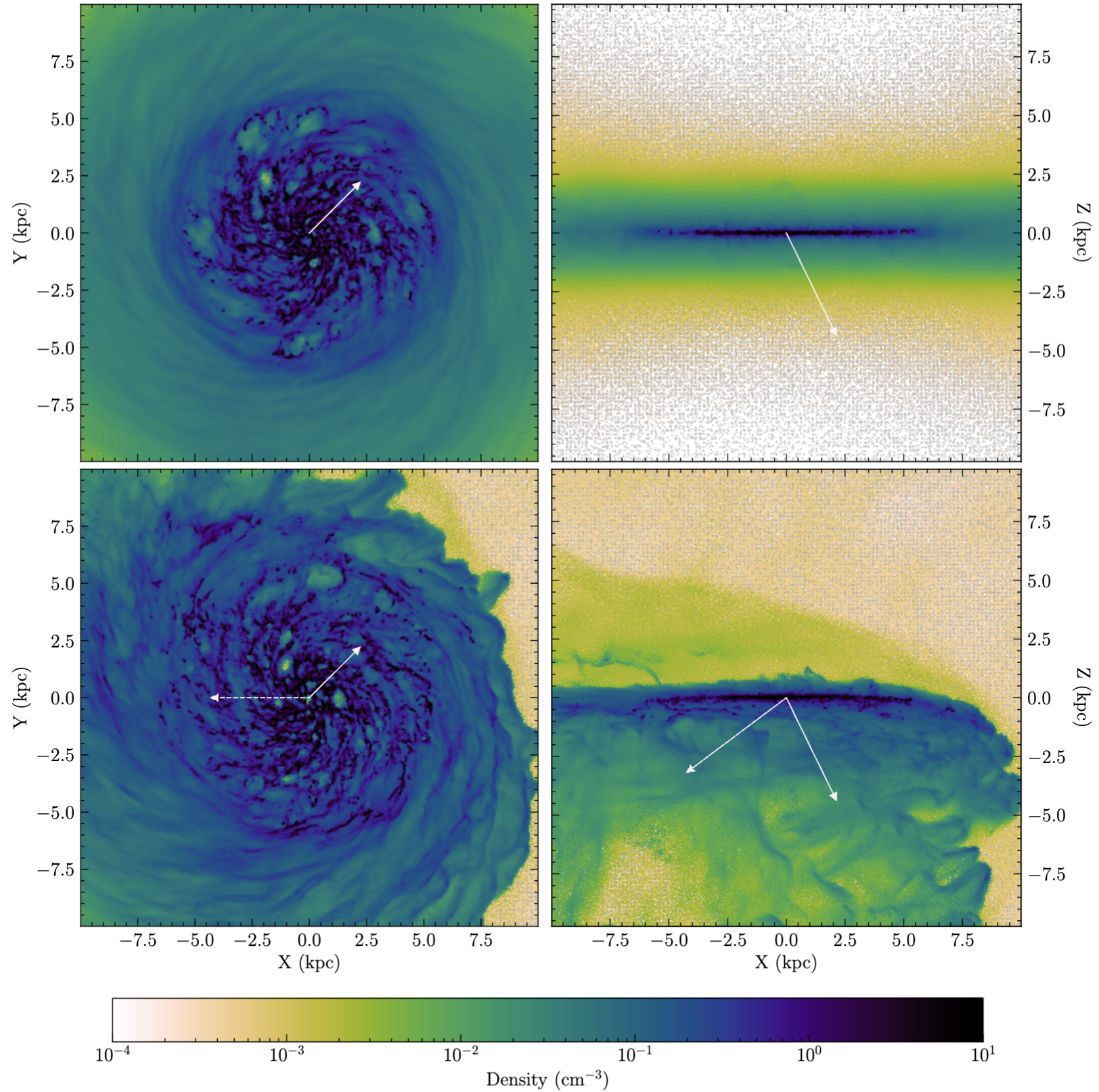
This project utilizes the gizmo-MHD code to produce realistic simulations of the Large Magellanic Cloud (LMC) as it undergoes ram pressure stripping within the Milky Way environment. By modeling both Rotation Measure (RM) and Dispersion Measure (DM) observables, we create mock datasets that closely match actual observational results. The resulting simulations not only shed light on the physical processes shaping the LMC, but also feature visually striking outputs that highlight the complexity and beauty of galactic interactions.
Videos: Demonstration / related visualizations of the simulation (source: YouTube).
Gas Mixing and the Role of Magnetic Fields in the Circumgalactic Medium
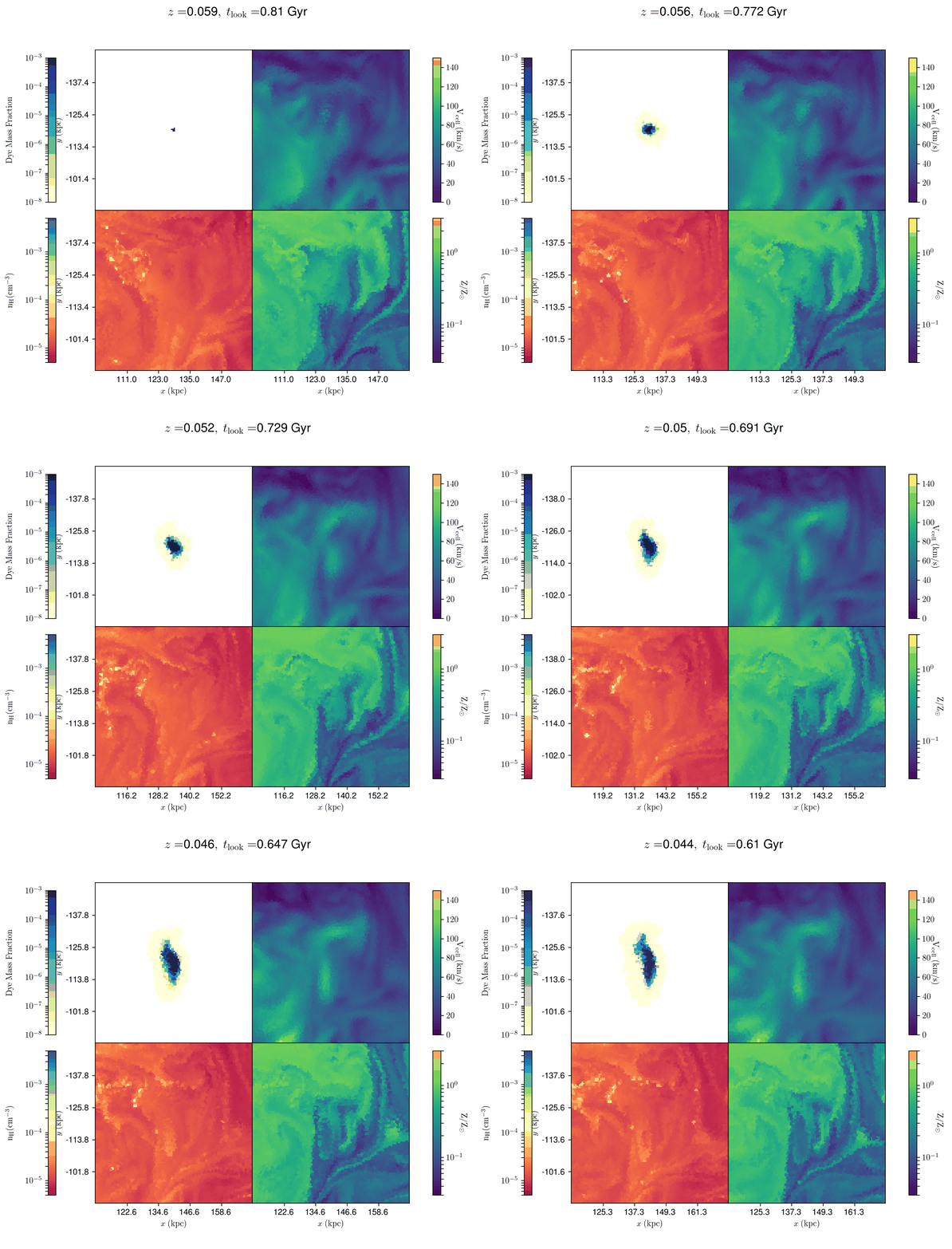
This project leverages zoom-in magnetohydrodynamical (MHD) cosmological simulations initialized with AURIGA conditions to investigate gas mixing processes in the circumgalactic medium (CGM). By injecting passive scalar tracers into the CGM, we track its evolution and identify the gas properties that predominantly drive mixing. Our findings reveal that shear and velocity dispersion strongly correlate with the size and shape of mixed gas clouds, indicating that shear flows are the primary mechanism for mixing. Currently, efforts are underway to elucidate how magnetic fields influence these shear-driven processes, potentially affecting the velocity dispersion and gas dynamics in the CGM.
Magnetic Fields in Elliptical Galaxies
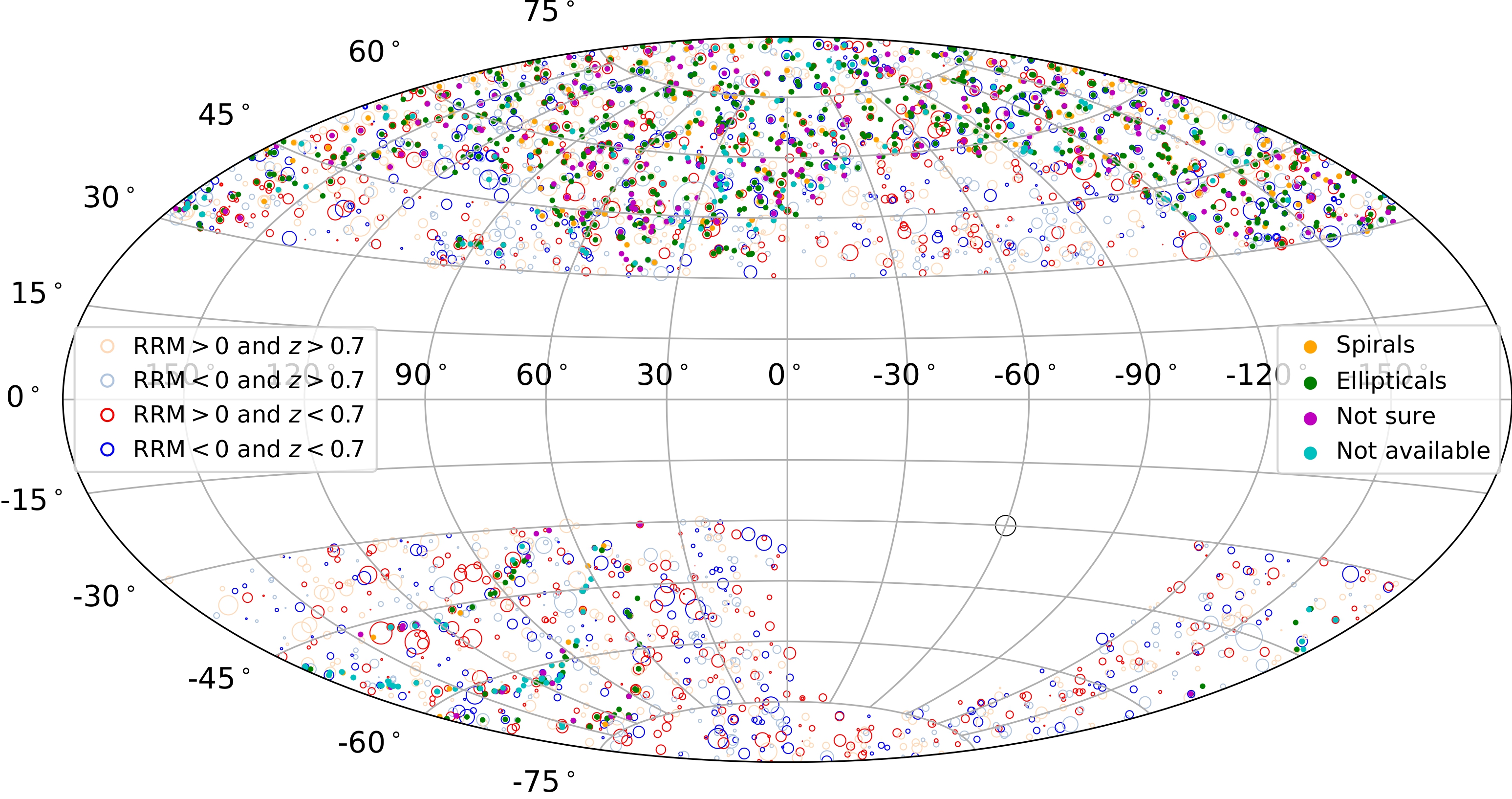
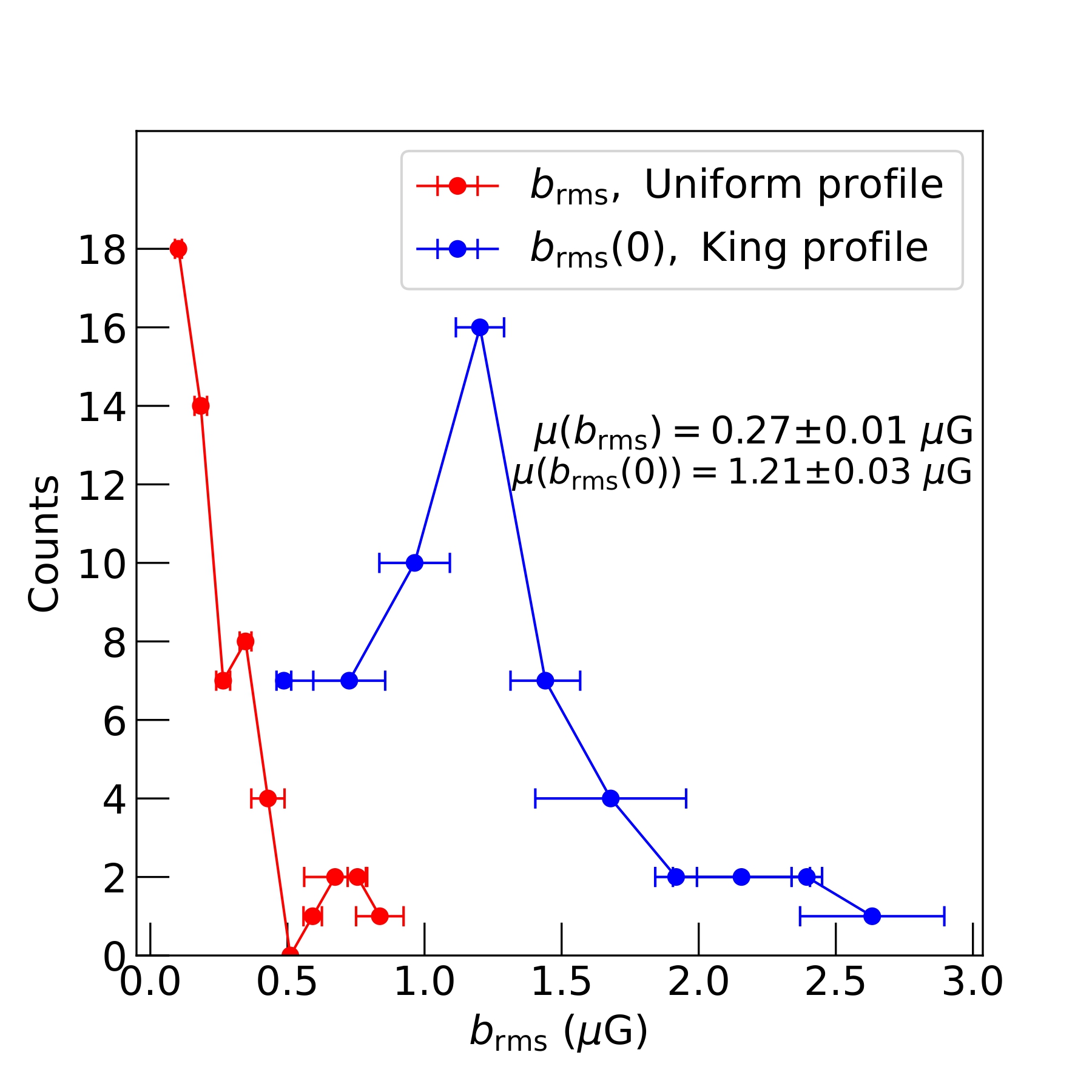
This project uses radio polarimetry to constrain magnetic fields in elliptical galaxies via two complementary Faraday-rotation methods. The Laing–Garrington technique uses jet–counterjet polarization and rotation-measure asymmetries in NVSS-based radio-galaxy pairs to infer small-scale fields of about 0.06–3 microgauss in elliptical haloes. A background Faraday-rotation analysis combines the Farnes et al. rotation-measure catalogue with SDSS DR16 and Galaxy Zoo to relate residual rotation-measure statistics to intervening galaxy type and number, fitting Gaussian and non-Gaussian distributions and applying Kolmogorov–Smirnov tests to robustly quantify halo field strengths.